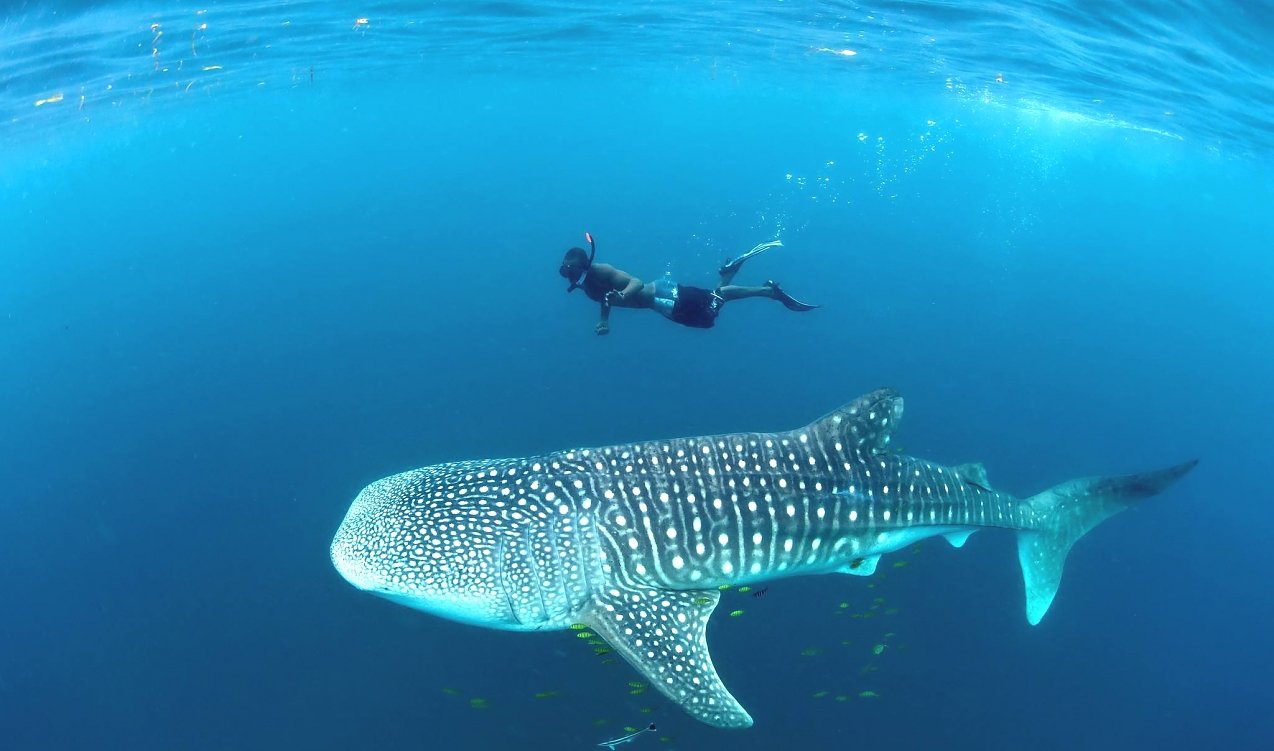
Of everything you might see on a boat trip to the Daymaniyat Islands — sea turtles, coral gardens, dolphins, reef fish — nothing gets people more excited than the possibility of a whale shark. They’re the largest fish in the ocean, they’re gentle giants, and spotting one is the kind of moment people remember for the rest of their lives.
They’re also not something you can simply show up and expect to see on any given day. There’s a real season when your chances go up significantly, and understanding it can make the difference between planning your trip around pure luck and planning it with a genuine strategy. Here’s exactly what you need to know.
What Is a Whale Shark, and Why Are They Special?
Despite the name, a whale shark isn’t a whale at all — it’s the largest fish species in the world, capable of growing over 12 meters long, and it’s a filter feeder, meaning it eats plankton and small fish rather than anything resembling what “shark” might make you picture. They’re slow-moving, gentle, and completely harmless to swimmers and snorkelers.
Whale shark encounters are considered a bucket-list wildlife experience globally, not just locally — they’re found in relatively few places worldwide where conditions consistently bring them close to the surface and close to shore, which is part of what makes an Oman sighting genuinely special rather than an everyday occurrence.
When Is Whale Shark Season at Daymaniyat Islands?
Whale shark sightings at the Daymaniyat Islands are most commonly reported between July and September. This window lines up with specific seasonal conditions in the waters around the reserve — warmer sea temperatures and increased plankton activity draw whale sharks closer to the surface and closer to shore, which is exactly what makes them more visible to boat tours during these months.
Outside of this window, whale shark sightings become considerably rarer, though not impossible — marine wildlife doesn’t follow a strict calendar, and occasional out-of-season sightings do happen.
Peak Months for Sightings
Within the broader season, August and September tend to produce the highest number of reported sightings. If you’re specifically trying to maximize your odds and have flexibility in your travel dates, targeting this narrower window is worth the extra planning.
Are Whale Shark Sightings Guaranteed?
Here’s the honest answer: no wildlife sighting anywhere in the world is ever 100% guaranteed, and whale sharks are no exception. Anyone promising a guaranteed sighting isn’t being fully transparent with you.
What we can offer is genuinely improved odds during the season described above, guided by experienced captains who know the areas and patterns where whale sharks are most commonly spotted. That unpredictability is actually part of what makes an encounter special — it’s a genuine wildlife moment, not a staged photo opportunity.
What Increases Your Chances of Seeing a Whale Shark
Time of Day
Morning tours generally offer calmer water and better visibility, which benefits nearly every kind of wildlife spotting — whale sharks included. If seeing a whale shark is a priority for your trip, an early departure gives you a real edge over an afternoon booking.
Choosing the Right Tour Type
Tours that spend more time on the water and cover more territory naturally increase your exposure to a potential sighting. Our Full Day Tour covers the most ground and time, giving you the best overall odds, while a Private Morning Snorkeling charter gives your captain more flexibility to adjust course toward recent sighting reports without needing to coordinate a shared group’s schedule.
Time of Year Within the Season
As covered above, targeting the peak window within whale shark season — rather than the edges of it — meaningfully improves your odds if your travel dates are flexible.
What to Do If You Spot a Whale Shark
If you’re lucky enough to encounter one, a few simple guidelines protect both you and the animal:
-
- Keep a respectful distance — let the whale shark set the pace and direction; don’t chase or crowd it
-
- No touching — even gentle contact can stress the animal and strip the protective mucus layer on its skin
-
- Avoid flash photography — it’s unnecessary in daylight snorkeling conditions and can startle marine life
-
- Stay calm and float naturally — sudden splashing or excited swimming can cause the shark to move away sooner
Following these guidelines isn’t just about etiquette — it’s part of how the Daymaniyat Islands reserve has managed to stay a healthy habitat for encounters like this to keep happening for future visitors.
Other Marine Life You’ll See Even Without a Whale Shark Sighting
Even on a day without a whale shark, a trip to the Daymaniyat Islands is genuinely worth it on its own merits. Sea turtles are a near-certainty on most tours, along with coral gardens, colorful reef fish, and — depending on the day — dolphins, rays, and reef sharks. A whale shark sighting is the exciting bonus on top of an already rewarding day, not the only reason to go.
How to Book a Whale Shark Season Tour
Given the seasonal excitement around whale shark sightings, tours during peak season tend to book up faster than the rest of the year. If your travel dates fall within the season and seeing a whale shark is a priority, booking a few days to a week in advance is a smart move to secure your preferred date and time.
Frequently Asked Questions
Are whale shark sightings guaranteed at Daymaniyat Islands? No — wildlife sightings are never guaranteed anywhere, but sightings are notably more common during the seasonal window described above, especially with an experienced guide who knows recent sighting patterns.
What’s the best month to see whale sharks at Daymaniyat Islands? Sightings are most common during August and September. If you have flexible travel dates, targeting this window improves your chances.
Can you swim with whale sharks at Daymaniyat Islands? If one is spotted during your tour, your guide will support a respectful, safe snorkeling encounter following distance and no-touch guidelines — never a staged or guaranteed swim, but a genuine wildlife encounter when conditions allow.
Is it safe to snorkel near a whale shark? Yes — whale sharks are filter feeders with no interest in humans as prey, and they’re generally calm, slow-moving animals. Maintaining a respectful distance is about protecting the animal as much as it is about your comfort.
What other marine life can I see if I don’t spot a whale shark? Sea turtles, coral reefs, colorful reef fish, and often dolphins or rays are common sightings on nearly every tour, whale shark season or not.
Whale shark season is one of the most exciting times to visit the Daymaniyat Islands — and even if luck isn’t on your side that day, the reserve’s turtles, coral, and marine life make every trip worthwhile. Book your tour during peak season and see what the day brings.